Parole in Immigration Law
The Immigrant Legal Resource Center created the first comprehensive manual about parole in immigration law in 2016 to provide practitioners with a one-stop guide to the legal requirements of all the different types of parole, practice pointers about...
DACA Updates & Strategies
This webinar, geared toward practitioners and advocates, will focus on the recent changes to DACA, including a breakdown on the impact the rule and litigation has had to the access of DACA, an in-depth look at advance parole for DACA recipients, and...
Newsletters & Annual Reports
The ILRC's newsletter, The Immigrant Advocate, is published bi-annually. Each edition of The Immigrant Advocate features articles about ILRC’s current work in advancing immigrant rights. ILRC’s Annual Report provides an overview of our previous year and includes our financial position and highlights of the year’s focus.
Temporary Protected Status
Temporary Protected Status (TPS)
Temporary Protected Status (TPS) is an important form of humanitarian relief for people from certain designated countries that have experienced armed conflict, natural disaster, or others conditions that prevent nationals from returning safely.
ILRC develops TPS resources and materials to keep legal advocates and community members updated about TPS designations and application processes as well opportunities for TPS recipients to pursue more permanent forms of status. This area of immigration law changes frequently, so please visit this page for regular updates as well as the USCIS TPS page: https://www.uscis.gov/humanitarian/temporary-protected-status.
¿Qué es el TPS?
El Estatus de Protección Temporal (TPS, por sus siglas en inglés) es una importante forma de protección humanitaria para las personas provenientes de ciertos países designados que han experimentado conflictos armados, desastres naturales u otras condiciones que impiden que sus nacionales regresen de manera segura a sus países de origen. El TPS permite a las personas vivir y trabajar legalmente en los Estados Unidos sin obtener un estatus migratorio permanente.
El Centro de Recursos Legales para Inmigrantes (ILRC, por sus siglas en inglés) desarrolla recursos y materiales sobre el TPS para mantener informados a los defensores legales y a los miembros de las comunidades sobre las designaciones de TPS, los procesos de solicitud y las oportunidades para que las personas beneficiarias del TPS puedan obtener formas de estatus migratorio más permanentes. Esta área del derecho migratorio cambia con frecuencia. Por eso, visite esta página regularmente para consultar las últimas novedades, así como la página del TPS del Servicio de Ciudadanía e Inmigración de los Estados Unidos (USCIS): https://www.uscis.gov/humanitarian/temporary-protected-status.
What's Happening with TPS?
¿QUÉ ESTÁ PASANDO CON EL TPS?
Public Charge
What's Happening with Public Charge?
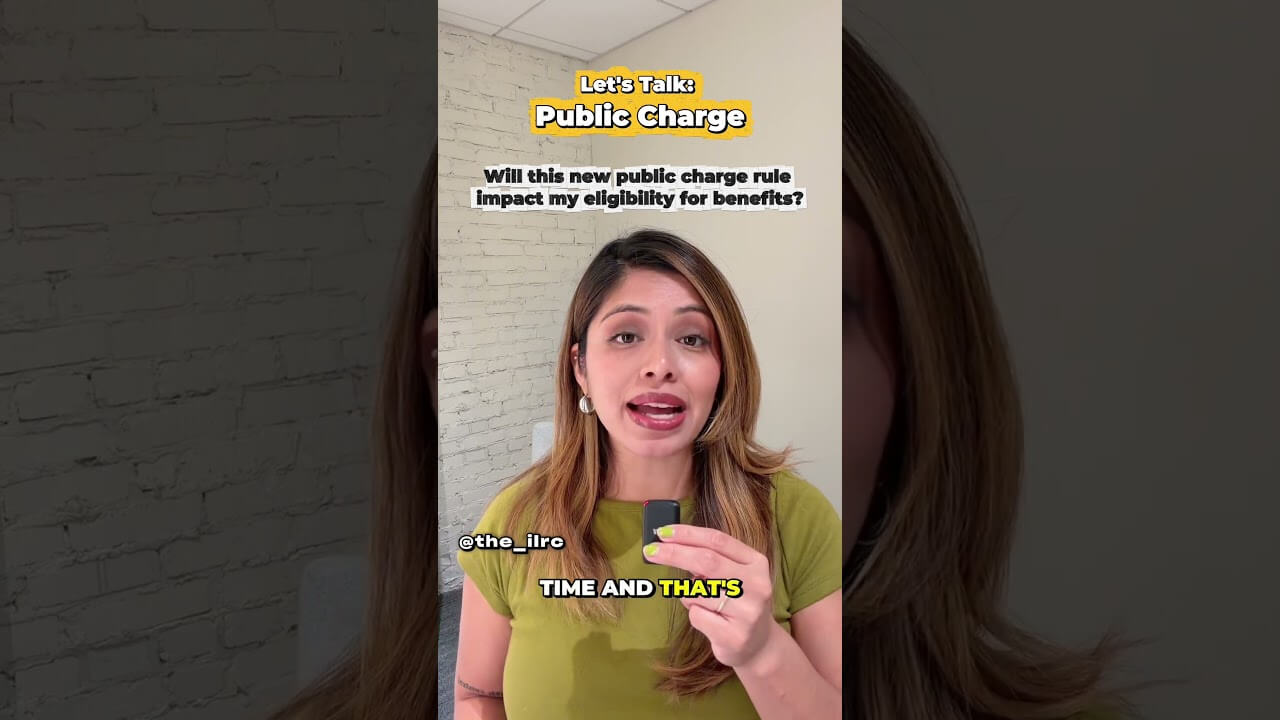
“Public charge” is a ground of inadmissibility. Grounds of inadmissibility are reasons that a person could be denied a green card, visa, or admission into the United States. In deciding whether to grant some applicants a green card or a visa, an immigration officer must decide whether that person is likely to become dependent on certain government benefits in the future, which would make them a “public charge.” It is not a test that applies to everyone, not even to all those applying for green cards.
The Immigrant Legal Resource Center (ILRC) provides trainings and technical assistance on public charge, produces numerous practice advisories, toolkits, and other resources, and authors a comprehensive manual, Public Charge and Immigration Law.