This one-page infographic summarizes the various California post-conviction relief vehicles, their requirements, and their immigration benefits.
The Immigrant Legal Resource Center (ILRC) submitted a comment to USCIS opposing proposed changes to Form I-130, which would more than double the form’s length and require additional information from petitioners and beneficiaries, including expanded criminal history, employment, education, and family-history questions.
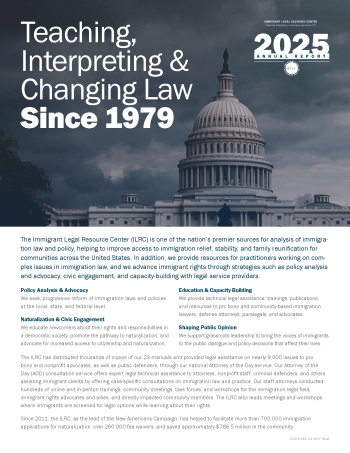
The ILRC has published its 2024 Annual Report, which includes information about the initiatives the organization took that year, as well as the organization's financial position.
This step-by-step guide will walk you through the steps for filing your first petition for habeas corpus (immigration) in the Southern District of California. The guide provides helpful tips and how-tos from registering for PACER, the federal court electronic filing system, to applying for admission to the district bar, to formatting and filing your petition and motion for injunctive relief. The guide includes helpful screenshots and references to the local rules, as well as links to other useful practice advisories and resources.
In this community explainer, we will discuss the effects of this decision, how it impacts advance parole travel and applications for adjustment of status, and what applicants must consider moving forward.
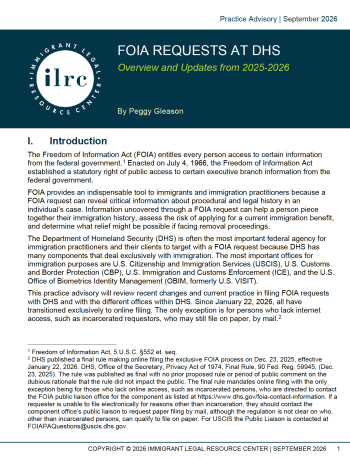
This practice advisory reviews recent changes and current practice in filing FOIA requests with DHS and with the different offices within DHS. Since January 22, 2026, all have transitioned exclusively to online filing. The only exception is for persons who lack internet access, such as incarcerated requestors, who may still file on paper, by mail.
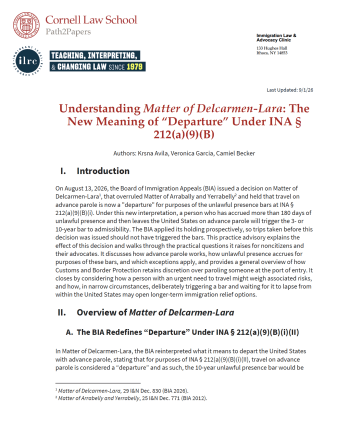
On August 13, 2026, the Board of Immigration Appeals (BIA) issued a decision on Matter of Delcarmen-Lara, that overruled Matter of Arrabally and Yerrabelly and held that travel on advance parole is now a "departure" for purposes of the unlawful presence bars at INA § 212(a)(9)(B)(i).
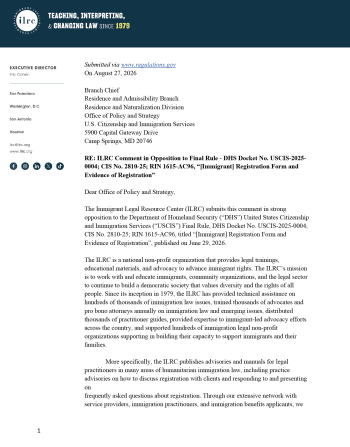
The Immigrant Legal Resource Center (ILRC) submitted a comment strongly opposing the Department of Homeland Security’s Final Rule on “[Immigrant] Registration Form and Evidence of Registration.” The rule expands and formalizes a registration process that could expose millions of immigrants—and potentially U.S. citizens—to increased fear, confusion, racial profiling, and immigration enforcement.