Term Page
Asylum Path Fragment
community A Guide for Immigration Advocates
Asylum
Family-Based
A Guide for Immigration Advocates is a practical and essential tool for beginning immigration attorneys, paralegals, DOJ accredited representatives, and nonprofit community-based organizations. The Guide is unique among immigration law resources...
Establishing Social Group in Asylum Claims
Asylum
This webinar will focus on establishing a social group and proving nexus in asylum claims. We will highlight hot topics in social group analysis, including recent decisions by the Attorney General and Board of Immigration Appeals, such as Matter of A...
Essentials of Asylum Law - 4th Ed., 2018
Asylum
This publication provides an overview of asylum law for advocates new to representing asylum clients, as well as for seasoned practitioners needing a thorough review of current standards.

This practice advisory outlines the requirements and process of enrolling in Temporary Protected Status (TPS) for the first time. It provides an overview of the basic requirements for TPS and identifies red flag issues that require careful analysis. It provides guidance on the TPS application process, including preparing a waiver of inadmissibility. It also offers practical guidance about when to file in immigration court and when an eligible individual may qualify for late initial registration.
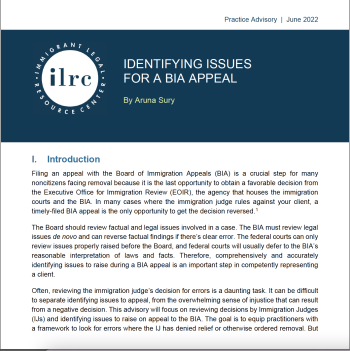
Filing an appeal with the Board of Immigration Appeals (BIA) is a crucial step for many noncitizens facing removal because it is the last opportunity to obtain a favorable decision from the Executive Office for Immigration Review. Often, reviewing the immigration judge’s decision for errors is a daunting task. It can be difficult to separate identifying issues to appeal, from the overwhelming sense of injustice that can result from a negative decision. This advisory will focus on reviewing decisions by Immigration Judges (IJs) and identifying issues to raise on appeal to the BIA. The goal is to equip practitioners with a framework to look for errors where the IJ has denied relief or otherwise ordered removal.
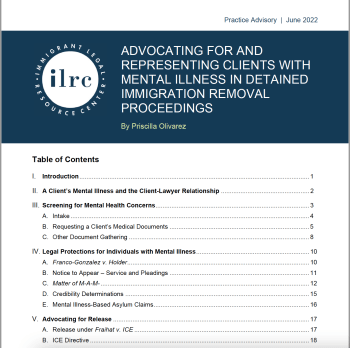
Clients with mental illness have needs and vulnerabilities that present unique challenges in immigration proceedings. This practice advisory provides an overview on advocating for clients with mental health issues, specifically focusing on representation in the detained setting. The advisory discusses legal authority that an immigration practitioner can utilize to protect a client’s due process rights and ensure their client’s agency is respected and they have a meaningful opportunity to present their case.

Two immigration statuses that may overlap are Asylum and Temporary Protected Status (TPS) because they both help people who are afraid of returning to their home country. While these two are different in a few ways, it is useful to know what each option offers and that applying for both is allowed, so long as an applicant is eligible. This brief guide delves into the ways these two options might intersect and what to keep in mind as individuals consider each type of status.
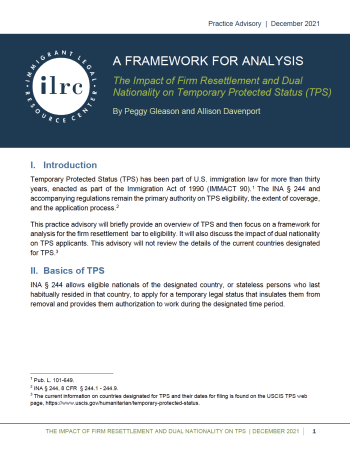
This practice advisory provides an overview of TPS and focuses on a framework for analysis for the firm resettlement bar to eligibility. It also discusses the impact of dual nationality on TPS applicants.
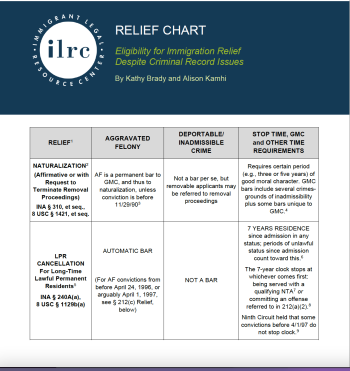
This Chart summarizes the criminal record bars to many forms of relief, to provide a quick way to check whether your client is potentially eligible for relief. See also ILRC, Immigration Relief Toolkit (2018).
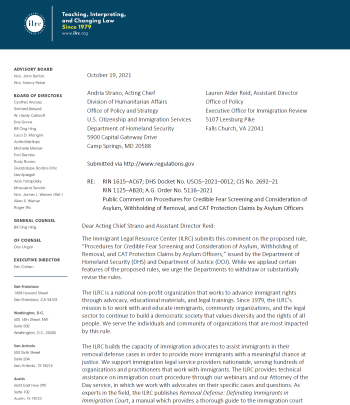
On October 19, 2021, the ILRC submitted comments raising concerns about USCIS’ proposed regulation changing the procedures for credible fear screenings and asylum. While the proposed regulation contains some provisions that would improve the current system, it also poses a significant risk to asylum seekers’ right to a full, fair and consistent hearing of their claims.