Term Page
DACA 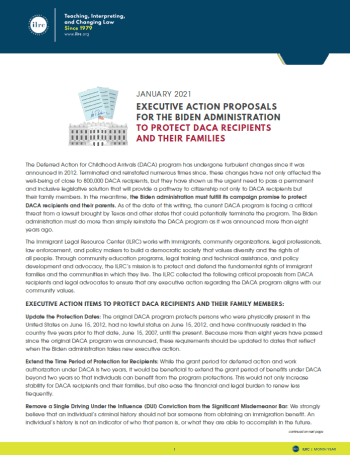
DACA has undergone turbulent changes since it was announced in 2012. Terminated and reinstated numerous times since, these changes have shown the urgent need to pass a permanent and inclusive legislative solution that will provide a pathway to citizenship not only to DACA recipients but their family members. In the meantime, the Biden administration must fulfill its campaign promise to protect DACA recipients and their parents. The ILRC collected 12 critical proposals from DACA recipients and legal advocates to ensure that any executive action regarding the DACA program aligns with our community values.
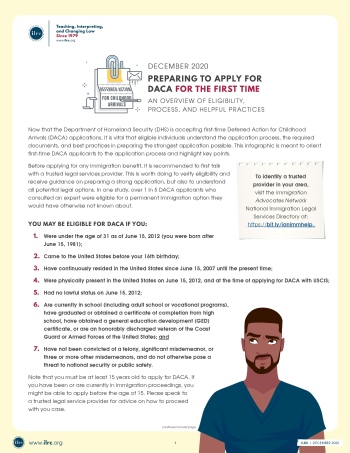
As new applicants begin to set their sights on initial DACA requests, there are several questions worth asking and steps worth taking to prepare productively. This guide is designed to walk community members through eligibility and process for submitting an initial application for deferred action and employment authorization. For information on submitting a renewal DACA application, please visit our full application deep dive video here.
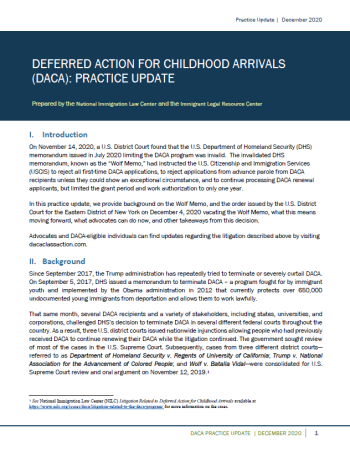
On November 14, 2020, a U.S. District Court found that the U.S. Department of Homeland Security (DHS) memorandum issued in July 2020 limiting the DACA program was invalid. This decision restored the DACA program to its original 2012 form and opened up the possibility for first-time applicants, restored two-year renewals, and allowed for DACA recipients to submit advance parole applications.
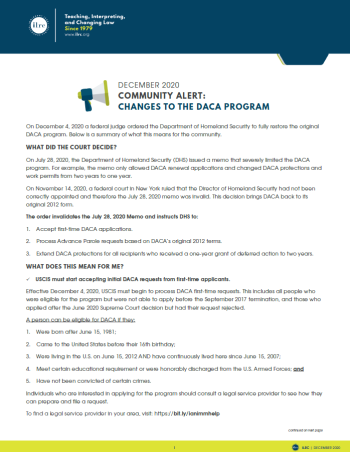
On December 4, 2020 a federal judge ordered the Department of Homeland Security to fully restore the original DACA Program. Allowing for the continuation of renewals, and opening the program to first time applicants. This resource is a summary on what this means for the community, how it impacts those looking to apply, and what next steps someone can take.
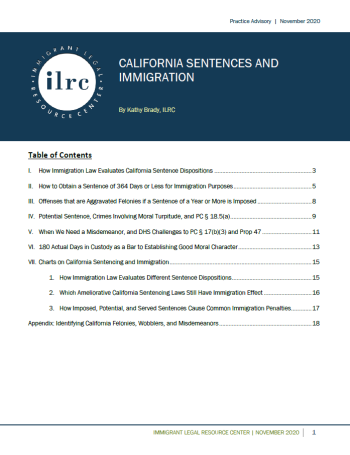
In some cases, the amount of an imposed, potential, or served criminal sentence can determine the outcome of the immigration case. The law governing how state sentencing dispositions affect immigration penalties is fast-changing. The good news is that an informed defender often can structure a sentence that gives the prosecution what they require, while avoiding immigration penalties. An informed immigration advocate wants to be able to explain this to an immigration judge or adjudicator to win the case.
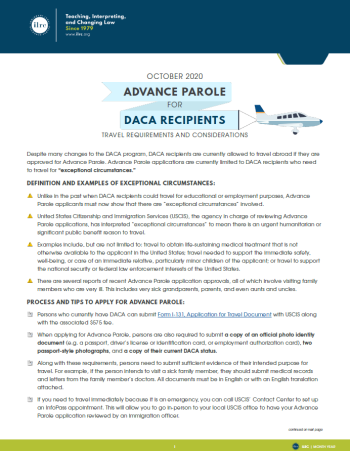
Despite many changes to the DACA program, DACA recipients are currently allowed to travel abroad if they are approved for Advance Parole. This resource provides an overview of the requirements, tips, and considerations for traveling abroad under Advance Parole as a DACA recipient.
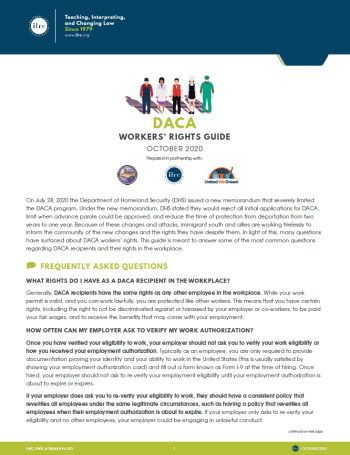
On July 28, 2020 the Department of Homeland Security (DHS) issued a new memorandum that severely limited the DACA program. This announcement has left immigrant youth and allies working tirelessly to inform the community of the new changes and the rights DACA recipients have. This DACA workers' guide, prepared in partnership United We Dream and Texas AFL-CIO, is meant to answer some of the most common questions regarding DACA recipients and their rights in the workplace.
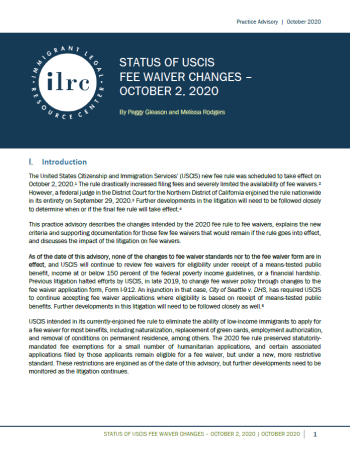
USCIS attempted to drastically limit fee waiver availability and fee waiver standards through the 2020 fee rule. The agency also tried to limit fee waivers by changing the I-912 fee waiver form. For now, these attempted changes have been stopped by injunctions. Applicants can continue to apply for fee waivers based on the 2011 fee waiver guidance.

This community resource is a condensed explainer for anyone with questions about DACA, with a brief overview on who can apply, who can renew, and what the recent USCIS changes to the program mean.
On July 28, 2020 the Department of Homeland Security issued a memorandum severely restricting the DACA program. Despite a recent U.S. Supreme Court decision fully reinstating the program, the Trump administration has issued another attack on the program. This community alert gives a brief summary of memorandum and the U.S. Citizenship and Immigration Services Implementing Guidance issued on August 21, 2020 and what it means for community members.