Term Page
Citizenship and Naturalization
On October 12, 2026, the Immigrant Legal Resource Center (ILRC) submitted a comment opposing a new Department of Homeland Security (DHS) interim final rule that would make electronic filing mandatory for immigration benefit applications, along with a proposed form requiring applicants to request a waiver from that requirement.
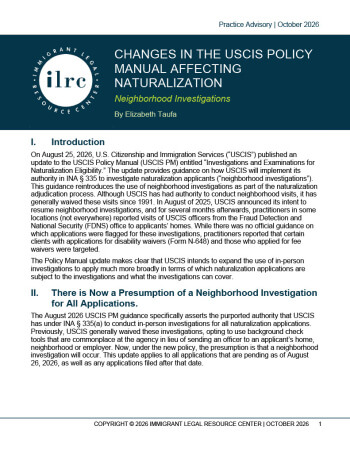
This practice advisory analyzes the recent changes in the U.S. Citizenship and Immigration Services Policy Manual regarding the implementation of neighborhood investigations in naturalization adjudications. The advisory includes practical tips and considerations that practitioners should use when advising clients on applying for naturalization under this new policy.
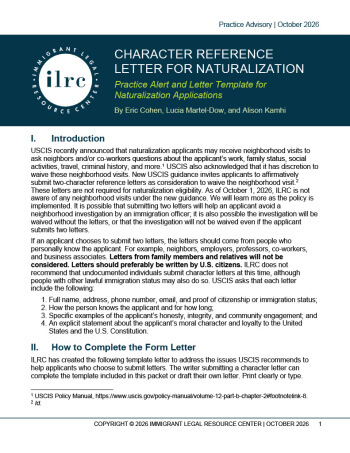
USCIS recently announced that naturalization applicants may receive neighborhood visits to ask neighbors and/or co-workers questions about the applicant’s work, family status, social activities, travel, criminal history, and more. USCIS also acknowledged that it has discretion to waive these neighborhood visits. New USCIS guidance invites applicants to affirmatively submit two-character reference letters as consideration to waive the neighborhood visit. These letters are not required for naturalization eligibility. ILRC has created the following template letter to help applicants who choose to submit letters.
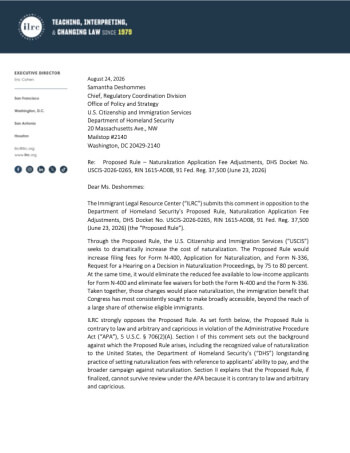
On August, 24, 2026, the ILRC submitted a comment opposing a proposed rule entitled Naturalization Application Fee Adjustments. The rule seeks to raise the application fee for Form N-400 by 75-80% as well as eliminates the fee waiver and fee reduction for naturalization applications. ILRC opposes this rule given that it will create a substantial barrier for low-income naturalization applicants who could be permanently priced out of citizenship.
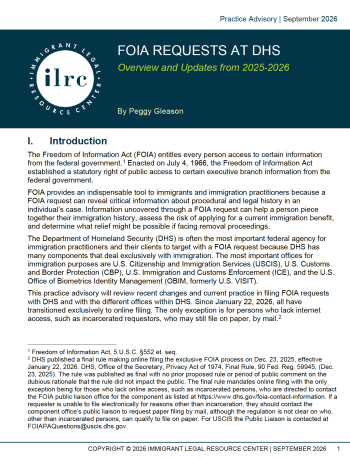
This practice advisory reviews recent changes and current practice in filing FOIA requests with DHS and with the different offices within DHS. Since January 22, 2026, all have transitioned exclusively to online filing. The only exception is for persons who lack internet access, such as incarcerated requestors, who may still file on paper, by mail.
On June 22, 2026, the Immigrant Legal Resource Center (ILRC) submitted a comment opposing ICE’s proposed rule to increase the fee imposed on individuals ordered removed in absentia from $5,130 to $18,000.
This explainer offers information for both noncitizens and U.S. citizens about the possible impacts of their social media online presence.
This explainer provides information and context for the Department of Homeland Security’s proposed rule seeking to change Form AR-11, Change of Address. DHS proposes to add questions seeking information about a person’s employment or current schooling and whether they have received any means-tested benefit. The proposed form change is over-broad and will result in confusion for applicants who are required to update the government about their address changes. This rule is proposed and is NOT in effect yet.
The U.S. Department of Justice transferred out all permanent staff from the Recognition and Accreditation program in March 2026, rendering the future of the program uncertain. ILRC wrote to DOJ demanding reinstatement of staff and a return to reasonable processing times for applications.
ILRC submitted this comment to DHS opposing recent changes to FOIA rules effective January 22, 2026 that restrict public access. DHS published a final rule in violation of the Administrative Procedures Act by unlawfully bypassing public notice and comment. The rule eliminates paper filing of FOIA requests and allows DHS in its discretion to administratively close requests that it deems to insufficiently describe the records sought.